

Keep Calm and Carry On?
The Commodification of Calm, and How Ancient Wisdom Can Help

“Within each of us is a divine treasure, and if we hope to discover it, we need to go deep into the heart of who we are. To find that treasure requires that we work like a wood carver who does not work by adding, but by cutting away, removing what is rough to reveal what shimmers from within.” —Meister Eckhart (1260–1328)
Years ago when I began training as a Christian therapist, I asked a question: What’s the goal?
I really wasn’t sure.
Was it catharsis—a good, healing cry?
Was it insight—an aha about your childhood wounds?
Was it a better boundary—meant to foster connection?
I was also finishing my Master of Divinity degree, and was considering the larger telos of it all—what is flourishing on this therapeutic journey?
It seemed to matter for the significant work of soul care we were engaged in. And yet, from supervisor to supervisor, the answers varied.
Years later, my first book—Leaving Egypt: Finding God in the Wilderness Places— was devoted to that question, as I anchored my own vision in the long journey home from slavery, through Sinai and sandy deserts, to a secure place—from neurosis to theosis, as I titled one chapter.
Since then, we’ve learned a lot more about nervous system physiology, and I sense new goals being offered beyond catharsis, insight, and boundaries. Today, we’re invited to the kind of work that produces “calm,” that fosters “regulation,” that invites “ventral anchoring,” and more—a new language of the nervous system, offering an invaluable contribution to human flourishing.
And yet, it’s become an industry, with apps and techniques and vagus nerve stimulation devices and books.
Calm™ has been commodified.
What Is This “Calm” You’re Seeking?
When a group I was engaging was asking about resources and techniques and devices and media that could help them find this elusive state of calm, I pausing because I sensed the urgency.
After a moment, I asked:
What if what you’re seeking is already yours?
I saw a few blank stares.
But my point was this: we’ve turned nervous system regulation into another pursuit.
And it’s not surprising.
As I’ve written about in Healing What’s Within, it’s what we know in our bones, an ancient echo of a slithering serpent’s deceit in Genesis 3—the not-so-subtle hint that what you’re looking for is out there, waiting to be grasped, like Adam and Eve grasped for the tempting fruit.
Purchase this vagal toning device for $399!
Or, grab this yearlong subscription to the state-of-the-art breathwork app!
Or, enroll in this training for nervous system work not available anywhere else!
And—guess what?!—that buzzing anxiety will go away.
That nagging restlessness will disappear.
Indeed, the promised land is just over the horizon!
Do you feel the pull?
It’s just out there—yours to acquire—until it isn’t.
That’s not to say that particular practices aren’t valuable—they are, and I commend them regularly—as resources to support someone, not the guaranteed means to unlocking the elusive calm.
Yes, I’m deeply invested in engaging the best insights of today’s neuroscience, but when I sense its limits, I continually return to ancient wisdom.
Ancient Calm?
Recently, I pulled a dusty copy of Cyprian Smith’s The Way of Paradox: Spiritual Life as Taught by Meister Eckhart off my shelf. I set it alongside Jon Sweeney and Mark Burrow’s Meister Eckhart: Book of the Heart. And these two books accompanied me on a little birthday vacation week away.
Sitting back in my camp chair one morning with a few hours of spacious time ahead, I exhaled.
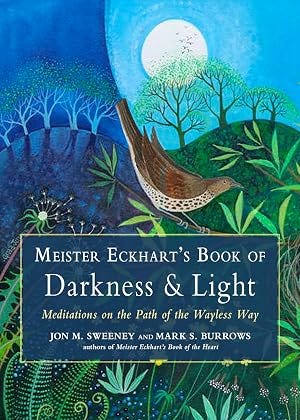
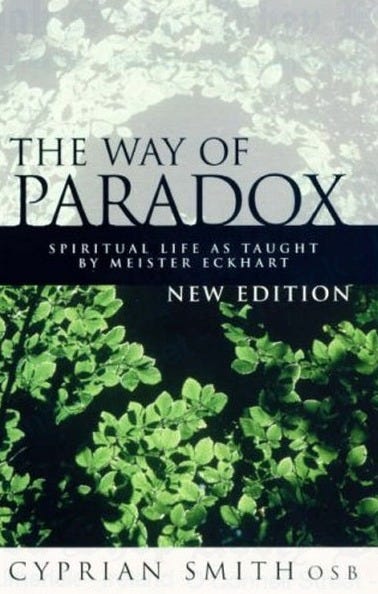
Echoing Jesus’s “the kingdom of heaven is within you” and his words to the elder son “everything I have is (already) yours,” the German Dominican philosopher and priest Meister Eckhart was eager to remind his listeners that what you’re seeking is already yours.
He once said:
“God is at home. It is we who’ve gone out for a walk.”
You hear this echoed in the quote at the top, too.
Eckhart knew his own restless heart, and he was interested in calm. In fact, he had a word for it:
Gelassenheit.
Now, I’m no German scholar, but I’ve done a little digging and Eckhart’s vision of calm is a bit different than ours. For Eckhart, this “calm” state he envisions is not one we grasp or acquire or achieve. The best of contemporary neuroscience would agree, but marketplace products offering calm don’t always heed the science.
For Eckhart, gelassenheit described a state of relinquishment, of letting go, of opening our hands, even releasement (as John O’Donohue names it).

Eckhart might’ve said that grasping is the problem.
We grasp after some image of God fashioned for pragmatic or power-seeking motives.
We grasp after some image of ourselves.
We grasp for success.
We grasp for healing, for certainty, and even for calm.
And I feel this.
I’ve spent a lot of my life chasing the thing.
It’s what we learned in school, in sports, in games, even in a church—there was always another achievement to unlock. We’re practically formed to grasp in our earliest years, and this grasping serves us in the first half of life until we hit a wall or realize our limits—often through significant disorientation, disruptions, and more. Most of us don’t know what to do when we arrive at this wall, and there are too-few guides around to help us navigate.
So, we grasp some more.
Scan your life: what did you learn to grasp for? What subtle formation oriented your life toward grasping? What did your school reward? What did your church prize? What would you need to achieve to be sanctified, smart, or successful? How were you formed to grasp?
Already Yours
I turned 56 last week and grabbed copies of those books before Sara and I took a short birthday trip.
Because I needed to be reminded.
Even after midlife’s pruning, I still grasp.
Even after experiencing the futility of grasping, I keep reaching.
Eckhart might say today that we’re all addicts looking for the next fix—even if that fix is what we call “calm.”
Perhaps the invitation—for you and for me—is to simply notice the grasping. Notice that subtle pull within to search for it, to reach for it, to purchase it.
And then, breathe.
Breathe in—and exhale.
Perhaps an old prayer might help:
Calm me oh Lord (inhale)
As you stilled the storm (exhale)
Still me oh Lord (inhale)
Keep me from harm (exhale)
Let all the tumult (inhale)
within me cease (exhale)
Enfold me Lord (inhale)
in Your peace. (Exhale)
(Celtic prayer via David Adam)
And then consider: what if what I’m searching for is already available, in some mysterious way, to me, even within me?
What if I’m already the beloved?
What if Jesus’s words to the elder brother are true and it’s all already mine?
What if I’m one with God, even now?
What if “home” is a spacious place within?
What if a “hidden wholeness” is my spiritual birthright and eternal inheritance?
And, as I wrote about years ago in a Lenten devotional, what if all I need to do is to fall into the goodness that is already given?
This essay is free.
I’d be grateful if you might consider becoming a paid subscriber, as it helps me keep writing. And I occasionally offered paid subscriber content.
Do you need care yourself? Consider joining me or one of my colleagues for a five-day intensive, or pursue ongoing care from wise, seasoned souls. Learn more.

Want to read more?
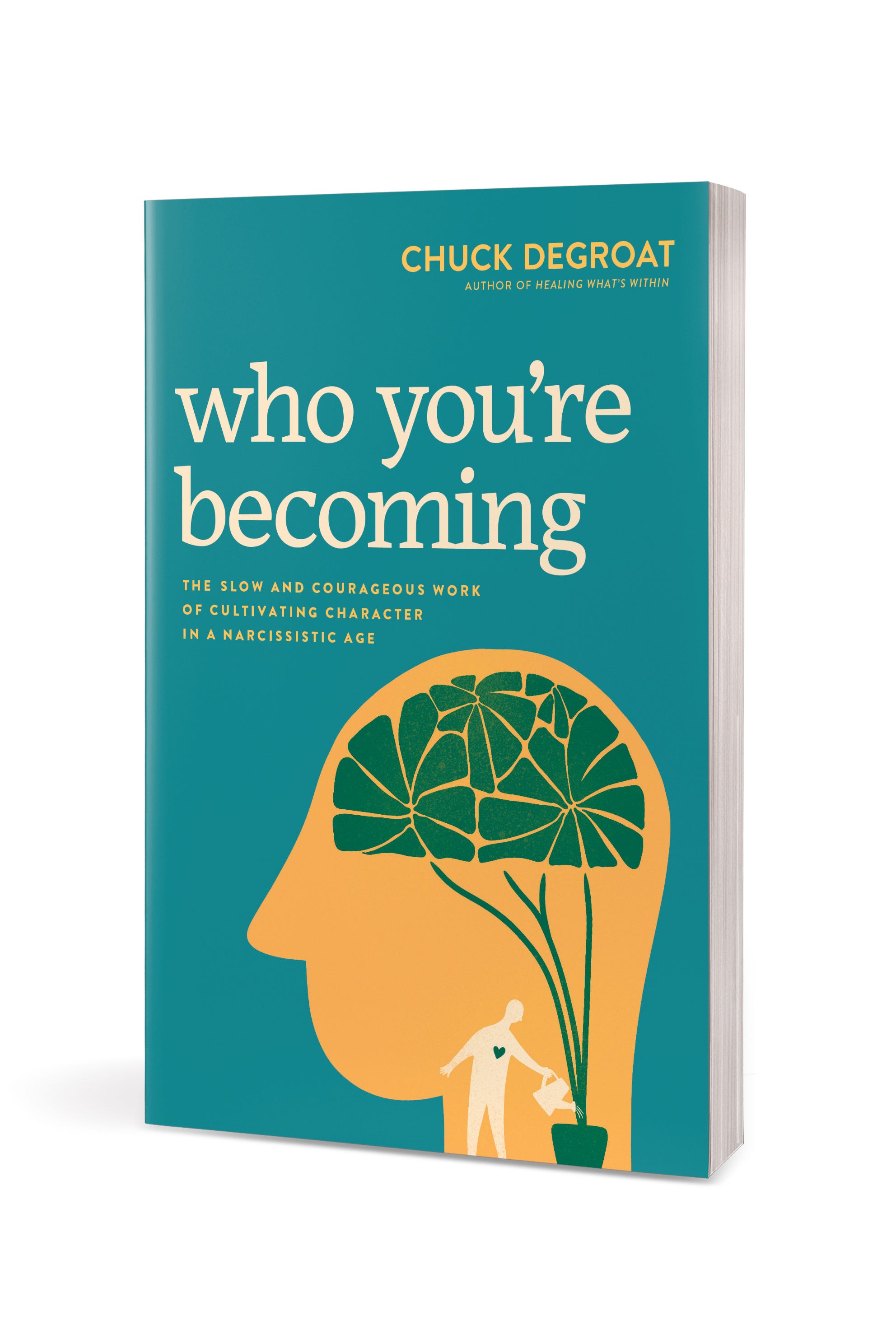
These are my seven books, including the new one—and each, in its own way, emphasizes the themes from today.
And guess what—soon you’ll be able to join a launch team for the new one and get early access to the book—and to a film that tells the story of God’s loving pursuit through the eyes of an ancient sage.
Stay tuned.
Do you prefer watching videos?
I created a YouTube channel for that featuring videos on character, narcissism, healing from trauma, wholeness, soul care, and more.
Fall into the “calm” that is already yours,
We ALL need to be reminded.
Chuck….thank you, again, for these life liberating words. Such Life Changing Words, “All that is mine is yours”, IF we believe these words to be true!
THIS IS the Most Precious GIFT to us from God, to begin living our lives in the reality of these words….to begin thinking, understanding and recognizing that within each of us, Is a Divine Treasure, and it’s God Himself…it is our inseparable oneness with Him…meaning that the Father’s Infinite Intimate Love for His Son, is and will forever be The Same Infinite Intimate Love for us. “All that is mine is yours”!
The amazing and astounding words you share with us from Meister Eckhart, also remind me of some beautiful, deeply reflective words from our friend and Trappist monk, Jim Finley, where he speaks so much of this in his book, “The Awakening Call”, ‘fostering intimacy with God’…..
(((…..God waits to be discovered in the red, wet wonder of our blood. Our way to God is that of our following his awakening call into his presence incarnate in our beating heart….which begins with our ‘letting go’ of the obsessions that alienate us from the reality and holiness of our bodily being….’letting go’ referring to a process of conversion from goal-dominated consciousness to a detached, open awareness of the divine dimensions of the present moment.
….For our preoccupation with goals is, in effect, our irresponsibility to the Supreme Task of Being Present to God in the Present Moment. For our imagined goal is the expression of our ignorance of the consummate union with God that is even now the hidden ground of the present moment….)))
Blessings Everywhere!❤️🙌🙌❤️